





What Tesla Model Y L Owners Wish They Knew Before Daily Driving

Many Tesla Model Y L owners only realize later that what truly affects the daily driving experience is not long-distance travel or complex features, but the ordinary driving scenarios that repeat every day. At first, the cabin looks simple and spacious enough. But after commuting, pickups and drop-offs, parking, retrieving items, and charging happen again and again, owners gradually realize that the daily driving experience is not determined by one major feature, but shaped by countless small details working together. Because of this, understanding the real rhythm of daily Model Y L use in advance is often more valuable than simply knowing the specifications.
In Tesla Model Y L daily driving, the most easily underestimated factor is the long-term impact of “putting items back where they belong.” Cables, cup holders, phones, keys, children’s items, and passengers’ personal belongings can constantly interrupt the rhythm of getting items, getting in and out, and making short trips if they do not have fixed places. So planning storage flow in advance and using suitable organizing accessories can make everyday use smoother and prevent the cabin from becoming increasingly messy over time.
This article will further look at daily driving scenarios and break down the vehicle-use details that Tesla Model Y L owners most often readjust after long-term use, including cabin space logic, high-frequency area habits, personal item management, and real changes in convenience during daily commuting.
The Most Easily Overlooked Real Issues Before Daily Driving A Tesla Model Y L
When many people learn about the Tesla Model Y L, they first look at space, range, seat layout, and smart features. This information is indeed important, but it only shows what the vehicle is capable of. It does not fully show what the vehicle will be like once it enters daily life. The real differences usually appear after owners begin using it as a commuter car, family car, pickup and drop-off car, and short-distance runabout.
The most easily overlooked real issues with the Tesla Model Y L are actually twofold: one is that items inside the car lack stable places to return to, and the other is that high-frequency use continuously changes cabin order. The former determines whether things are easy to reach, while the latter determines whether the cabin can stay manageable over the long term. Many owners do not notice this at first because the cabin is clean when the car is newly delivered, and the usage scenarios have not fully unfolded yet.
Problem One: The Cabin Space Looks Sufficient, But Everyday Items Have No Fixed Place

The space advantage of the Model Y L can easily give people a sense of reassurance, as if daily use will not become too messy as long as the car is large enough. But once the vehicle enters family use and commuting rhythms, the first things to get out of control inside the cabin are often not large pieces of luggage, but the small items that appear every day.
Phones, keys, tissues, charging cables, water bottles, receipts, children’s items, and shopping bags do not take up much space on their own, but they need clear places. If every item is only placed somewhere temporarily, the cabin will quickly go from “spacious enough” to “there is room everywhere, but nowhere feels convenient.”
This is also a key point in daily Model Y L driving: a large space only solves the problem of fitting things in, while fixed positions solve the problem of making them convenient to use.
Problem Two: High-Frequency Use Continuously Magnifies Cabin Order Consumption
Another easily overlooked issue is the impact of usage frequency on the cabin’s condition. Getting in and out multiple times a day, taking and placing items, picking up passengers, and making brief stops may seem like ordinary actions, but they continuously change the original order inside the car.
A temporarily placed water bottle or a packaging bag left in the rear seat may not seem serious on its own. But these actions happen every day, and few people have time to fully tidy the cabin after every stop. Over time, the cabin develops a very obvious accumulation of “usage traces.”
So what is truly worth understanding before daily driving a Tesla Model Y L is not one isolated shortcoming, but the fact that once this vehicle enters high-frequency daily scenarios, its requirements for item placement and spatial order will be higher than many owners expect.
Why The Minimalist Cabin Of The Model Y L Tests User Habits More?

The reason the minimalist cabin of the Model Y L tests user habits more is that it removes many “error-tolerant designs.” The layered center consoles, recesses, physical button areas, and complex storage structures in traditional cabins essentially help owners spread out attention and also make some clutter less obvious. The Model Y L does the opposite. It uses fewer lines, flatter surfaces, and a more open visual structure to create a stronger modern feel, but this also reduces the cabin’s tolerance for casual use.
This means that every owner habit will show up more quickly in the cabin’s condition. Whether items are put away in time, whether a certain area is occupied for long periods, and whether commonly used items have clear boundaries will all directly affect the cabin’s appearance and access efficiency. So minimalist design does not eliminate daily management; it transfers the responsibility for management from the vehicle structure to the owner’s habits.
The Model Y L cabin is not hard to use. It is simply less suited to a “put it wherever” approach. The simpler the space, the clearer the rules of use need to be. Otherwise, the clean, premium, and open feeling it originally creates will gradually be diluted through high-frequency use.
How Frequent Getting In And Out Slowly Magnifies The Sense Of Clutter?
Frequent getting in and out magnifies the sense of clutter inside the Tesla Model Y L because the cabin frequently switches roles. In the morning, it is a commuting space. During the day, it may become a temporary waiting area. In the afternoon, it takes on pickup and drop-off duties and short-distance item retrieval. Every scenario change temporarily occupies parts of the cabin; as this happens more often, the cabin’s condition slowly becomes looser.
This change does not necessarily appear as obvious dirtiness or mess. It is more like the gradual weakening of boundaries. Areas originally used for sitting begin to take on temporary storage functions, and convenient spots are occupied by items left there briefly. Over time, what owners first feel is not “there are too many things,” but that the cabin is becoming less convenient. Before getting in, they need to move things first. After getting out, there are always items left in place. The originally relaxed daily driving experience begins to be interrupted again and again by these small actions.
At the same time, the open cabin of the Model Y L further magnifies this condition, because the space is visible at a glance, and any unfinished traces of use remain in view.
Why Charging Cables And Small Personal Items Affect Daily Convenience First?

The daily convenience of the Tesla Model Y L is often first affected not by the trunk or large-item loading capacity, but by the small items around the driver’s seat that are repeatedly moved. This is because most actions in daily driving happen near the center console, armrest area, and other places within easy reach.
These items may seem unimportant individually, but they constantly take part in the driving process. They need to be picked up when parking, found when entering or exiting gates, and then casually placed somewhere else after a brief stop. Over time, owners find that many inconvenient feelings inside the cabin do not come from complicated problems, but from the operating path becoming longer.
Something that originally took one action begins to require several actions in a row. When the owner wants to quickly put down a personal item, they find that the high-frequency area has already been occupied for a long time. Although the cabin does not look obviously messy, usage efficiency gradually declines.
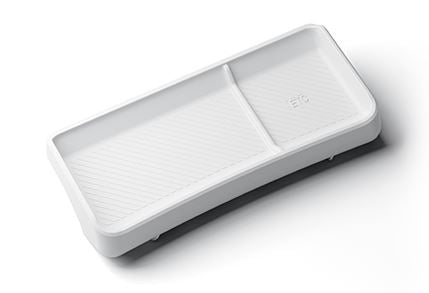
The Model Y L is especially sensitive to this change because its front-row area itself emphasizes simplicity and continuity. Once high-frequency small items remain in the operating area for a long time, the owner’s sense of convenience drops very noticeably. Therefore, many long-term owners later add small trays, armrest dividers, or fixed areas, not essentially to increase storage, but to shorten the daily actions that have been stretched out.
Why Cup Holders, Seat Gaps, And Side Spaces Become High-Frequency Blind Spots?
In Tesla Model Y L daily driving, the areas most easily overlooked over the long term are actually not the trunk or storage capacity, but high-frequency contact areas such as cup holders, seat gaps, and side spaces. These positions are closest to driving actions, yet they are not formal storage areas that owners actively plan.
Precisely because of this, they are easily used “temporarily” again and again in daily driving. During driving, many actions prioritize convenience and immediacy, so owners instinctively use the closest available spot. Over time, these areas slowly change from auxiliary spaces into areas that permanently take on transitional use.

|
Area |
Why It Easily Becomes A Blind Spot |
Common Changes After High-Frequency Use |
|
Cup Holder Area |
Open, convenient, and frequently used |
Changes from a single-function area into a mixed-use area |
|
Seat Gaps |
Close to the driving action path |
Small items easily slide down or get stuck |
|
Lack clear usage boundaries |
Temporary items remain there for long periods |
|
|
Door Storage Pockets |
Easily treated by default as low-priority areas |
Small items and miscellaneous objects keep accumulating |
The Tesla Model Y L makes this problem easier to notice because its front-row area emphasizes openness and continuity. Once these small areas remain in a “temporarily occupied” state for long periods, the owner’s sense of convenience drops noticeably. Many actions themselves do not become more complicated, but extra pauses begin to appear, such as needing to tidy the surrounding area before taking something, or unconsciously checking whether certain items have slid down after parking.
So the reason these areas become high-frequency blind spots is not that they are unimportant, but that they are too convenient, causing owners to rarely manage them actively. After long-term daily driving, many owners readjust how these areas are used, essentially to restore the cabin’s original operating rhythm.
How Rear Passengers And Shopping Change Cabin Space Allocation?
Rear passengers and shopping gradually change the space allocation of the Tesla Model Y L from a fixed state into a constantly changing state.
When many owners first begin using the car, the cabin logic is relatively simple: the front row is for driving, the rear row stays empty, and the trunk handles loading when needed. But after entering daily driving, the vehicle begins frequently handling pickups and drop-offs, family commuting, and everyday shopping, so space functions keep changing.
The rear row is usually the first area to change.
Because passengers bring not only more people, but also more personal belongings that remain in the car for long periods. The rear row gradually takes on waiting, temporary placement, and short-term storage functions, rather than remaining purely a seating area.
Shopping changes the rhythm of trunk use.
The Tesla Model Y L has a large enough trunk, but the issue in daily driving comes more from frequent loading and unloading. Short shopping trips, temporary purchases, and scattered item retrieval keep the trunk in a constant state of opening, closing, and readjustment.
Over time, owners find that the biggest change in the cabin is not that the space becomes smaller, but that the roles of different spaces begin to overlap. Areas originally belonging to driving, seating, and loading gradually lose their clear boundaries because of high-frequency use.
Why Fixed Storage Positions Are More Suitable For Daily Driving Than Temporary Tidying?

Fixed storage positions are more suitable for Tesla Model Y L daily driving because high-frequency vehicle use depends more on stable habits than temporary tidying.
Many owners initially get used to placing things wherever is convenient and then doing a full cleanup once the cabin starts becoming messy. But after long-term use, they find that what affects the daily experience is often not how often they tidy, but whether item positions are stable. As long as positions keep changing, many actions during driving are forced to readjust.
The meaning of fixed storage positions is that they allow high-frequency operations to form stable paths. Entering the vehicle, placing personal items, and setting off again after a short stop no longer require judging where items are, making the driving process more continuous.
Fixed positions are more suitable for the Model Y L for several practical reasons:
High-frequency items are easier to access quickly, with no need to search and confirm repeatedly.
The front-row area can remain stable over the long term, and the center console and armrest area will not be continuously occupied temporarily.
Space boundaries are clearer, and different areas do not frequently switch functions.
Daily driving is easier, and owners do not need to keep dealing with scattered small actions.
Many long-term Tesla Model Y L owners later begin reducing random placement. Because for daily driving, stable usage logic is often more important than one-time tidiness.
What Habits Owners Usually Readjust After The First Few Weeks?
Many Tesla Model Y L owners usually begin readjusting the following types of vehicle-use habits after the first few weeks:
·They no longer treat the vehicle as a long-term temporary storage space: some low-frequency items that were originally kept in the car for long periods are gradually cleared out.
·They begin distinguishing between items “used every day” and items “used only occasionally”: high-frequency items are kept in easier-to-reach places, while low-frequency items are actively reduced.
·They reduce visually exposed items inside the cabin: many owners later actively reduce the number of exposed items, keeping the front-row area visually more stable.
·They readjust how they use the trunk: the trunk no longer serves the function of “put it in first and deal with it later,” but instead emphasizes quick recovery after short trips.
These changes usually do not happen all at once, but gradually form through high-frequency daily driving. Because after long-term use, many Tesla Model Y L owners gradually discover that the more stable the cabin is, the lower the sense of fatigue in daily driving.
Conclusion
The daily driving experience of the Tesla Model Y L is rarely determined by one “big problem.” What truly continues to affect the ownership experience is often the small details that repeat every day: whether high-frequency items have stable positions, whether cabin areas remain convenient over time, and whether the space can quickly recover after short trips.
Many owners slowly realize after long-term use that what truly makes the cabin feel easier is not constant tidying, but reducing the chances for clutter to appear. When commonly used items have fixed boundaries and the driving area remains stable, the cabin does not need to be constantly readjusted.
This is also why many practical Tesla Model Y L accessories ultimately solve not the problem of “adding functions,” but the problem of reducing repeated consumption in daily use. They do not change the vehicle itself, but they can make daily driving more continuous, more stable, and easier to keep comfortable over the long term.
To help Tesla Model Y L owners further reduce small daily driving inconveniences, we have also selected a range of practical accessories better suited to daily driving scenarios, currently available with a limited-time 5% Early Bird discount. For product details or ordering support, contact: info@tespex.com.au.