





Tesla Accessories to Avoid: What New Owners Often Regret Buying

When taking delivery of a new Tesla, what is most often overestimated is not the vehicle’s range, but the owner’s ability to predict future needs. The excitement of collecting a new car can make every Tesla accessory seem like a sensible purchase. However, once daily commuting, charging, and cleaning begin, the carefully stocked shopping cart often becomes little more than a collection of items taking up space in the trunk.
The Tesla accessories that new owners are most likely to regret buying are usually decorative items that add only novelty, products that duplicate the vehicle’s built-in functions, accessories intended for rarely encountered situations, products driven by short-lived trends, and large kits filled with low-value items. Therefore, whether a Tesla accessory is worth buying should not be judged by its popularity, but by whether it solves a frequently occurring problem, fits the specific vehicle model, and suits the owner’s driving habits.
This article will bring Tesla accessories back from marketing labels to real-world driving scenarios, examining step by step how to avoid overbuying, misjudging popularity, leaving products unused, failing to verify practicality, and purchasing without a genuine need.
Why Do New Owners Buy Too Many Tesla Accessories Too Soon?

New owners tend to buy too many Tesla accessories too soon because the excitement of taking delivery continues before they have developed enough driving experience to judge the value of those accessories. Without knowing which inconveniences will occur repeatedly, owners begin shopping based on imagined scenarios involving commuting, charging, passengers, and cleaning.
In other words, purchasing begins before those needs have been tested in daily life.
After delivery, continuing to buy accessories can easily feel like the final stage of purchasing the vehicle rather than a new expense. This mindset reduces caution with each order, allowing the number of purchases to accumulate almost unnoticed.
However, stable needs only become apparent through repeated use.
A one-time inconvenience may never happen again, and a seemingly reasonable scenario may not actually be part of everyday life. When owners have little practical experience, it is difficult to distinguish between an ongoing need and a low-frequency possibility. As a result, they often pay for things they might use rather than things they will use regularly.
In addition, the price of the vehicle itself can further weaken awareness of the cost of individual accessories. Each small purchase may seem reasonable on its own, but together they can easily exceed what is actually needed.
Therefore, the problem is not that new owners lack rational judgment, but that their purchasing decisions get ahead of their real needs.
Why Are Popular Tesla Accessories Not Necessarily Needed?

Popular Tesla accessories are not necessarily needed because popularity means that many people are interested in a product, whereas genuine need means that it solves a recurring problem. The former measures the extent of attention; the latter measures practical value.
An accessory may become popular because it is useful, but it may also attract attention because of its novelty, visual impact, demonstration effect, or concentrated promotion.
In short-form videos, products that can show a clear before-and-after difference within a few seconds are more likely to receive clicks and shares. This promotional advantage contributes to popularity, but it does not automatically translate into long-term value.
Therefore, a high frequency of discussion does not necessarily mean a high frequency of use.
Moreover, popular content often leaves out the specific circumstances in which a product is useful.
An accessory may genuinely solve a problem for some owners, but once details such as the vehicle model, environment, and usage pattern are removed, a limited need can easily be presented as a universal one. The product itself has not lost its value; its range of applicability has simply been exaggerated through promotion.
Therefore, popularity can prove that market demand exists, but it cannot prove that every Tesla owner has the same need. Treating audience size as a measure of necessity is one of the most common logical mistakes when evaluating popular accessories.
Which Tesla Accessories Are Most Often Overrated and Left Unused?

The Tesla accessories most likely to be overrated and left unused include decorative covers, redundant storage products, bulky situational equipment, additional displays, rotating mounts, and large accessory kits. They may add new functions, but they also take up space and introduce additional setup or maintenance requirements. When the added value is insufficient, these products are more likely to be left unused.
The problem with these accessories is not that they are completely useless, but that their additional benefits are often weakened by the extra space, effort, and maintenance they require.
Trim Covers, Ambient Light Strips, and Door Projection Lights: These mainly change the vehicle’s appearance and generally do not directly improve storage, operation, or passenger comfort.
Multiple Center-Console Organizers, Cup-Holder Inserts, and Phone Mounts: These occupy the same areas and cannot all be used at once, so owners usually keep only one set.
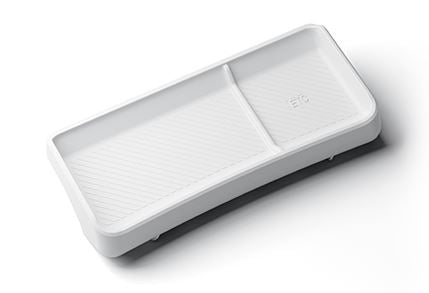
Camping Mattresses, Inflatable Rear-Seat Beds, and Steering-Wheel Dining Trays for Use While Parked: These can be useful in specific situations, but carrying, setting up, and storing them increases the amount of preparation required.
Small Instrument Displays, Passenger Entertainment Screens, and Rotating Center-Screen Mounts: These can provide additional information or adjustment options. However, owners who rely on the original center display may find that these additional interfaces simply duplicate existing functions.
Large Accessory Kits: Sellers offer them as complete sets, but owners use them as individual items. Small accessories that were not independently selected are more likely to remain unused for long periods.
However, this should not be treated as an absolute list of products to avoid. It is simply a classification of accessories with a high risk of being left unused.
How Can You Tell Whether an Accessory Is Truly Useful Before Buying?

The key to determining whether a Tesla accessory is genuinely useful is not how many functions it offers, but whether it can produce a consistent net improvement in real-world use. Owners should directly compare the results before and after purchase rather than estimating value from the product description.
|
Questions to Answer Before Buying |
Evidence Supporting the Purchase |
Warning Signs Against the Purchase |
|
What specific problem does it solve? |
You can explain when and where the problem occurs and what inconvenience it causes. |
You can only repeat the product’s functions and cannot describe your own problem. |
|
Is the problem significant enough to justify buying a dedicated accessory? |
The problem occurs frequently, or a single occurrence could have serious consequences. |
The problem rarely occurs, and leaving it unresolved has no practical impact. |
|
What will improve after installation? |
You can clearly identify reductions in time, actions, operational interruptions, or difficulty. |
The improvement can only be described using vague terms such as “more convenient” or “more premium.” |
|
What does each use require? |
The product remains ready to use without complicated setup or resetting. |
Each use requires unfolding, connecting, charging, cleaning, or repacking. |
|
Can it fit into your existing routine? |
The way it is used matches the habits the owner has already developed. |
The product requires the owner to permanently change a stable and convenient routine. |
|
Will the benefits appear consistently? |
The product delivers the same result under the vehicle’s main operating conditions. |
It works only under a small number of ideal conditions. |
|
Does it fit the vehicle correctly? |
The model year, dimensions, connections, and installation position have all been confirmed. |
Compatibility is assumed based only on a similar appearance, while key specifications remain unverified. |
|
Will it interfere with normal operation or safety? |
After installation, it does not obstruct visibility, controls, airbags, sensors, or charging. |
The product blocks, interferes with, or alters the normal operation of critical components. |
|
What happens if you stop using it? |
The product is easy to remove, store, or transfer, and any remaining impact is manageable. |
It is difficult to remove or leaves modifications that are hard to reverse. |
If an accessory cannot produce clear, specific, and mutually consistent answers in this table, it should currently be considered only a possible functional option rather than a practical product whose value has been verified.
How Can You Build a Tesla Accessory Purchasing Strategy Based on Real Needs?

A smarter purchasing strategy separates needs that must be addressed immediately from needs identified through actual vehicle use, delaying speculative purchases until real experience provides sufficient evidence.The entire decision-making process can be divided into three stages.
Stage One: Create a Closed Delivery Checklist
Before delivery, owners should create an initial checklist based only on confirmed factors such as parking conditions, charging methods, passenger arrangements, and cargo needs. Once the checklist is complete, no last-minute additions should be made. Any products discovered later should first be placed on a candidate list.
The goal at this stage is to establish a usable baseline rather than design the vehicle’s final configuration. The more accessories installed initially, the more changes occur inside the vehicle at the same time, making it harder to identify the source of later feedback.
Therefore, the delivery checklist should remain closed until the vehicle begins generating real usage information.
Stage Two: Create a Tesla Usage-Issue Queue
Once the vehicle is in use, owners should record problems throughout Tesla’s actual usage process, including the phone key, center touchscreen, home or public charging, front and rear trunks, passenger use, and interior cleaning.
For each problem, record only the stage at which it occurs and its actual impact. Similar entries should also be combined to prevent the same inconvenience from entering the purchasing scope under different names.
Each problem can be assigned one of three statuses: identified, recurring, or no purchase required.
Problems already resolved through vehicle settings, software changes, or adjustments in user habits should be removed from the queue. Only recurring issues should continue toward the purchasing stage.
Stage Three: Introduce the Smallest Solution in Order
At the purchasing stage, owners should rank problems by impact and address only one item in the queue at a time. After a new physical solution is put into use, older products serving the same purpose should be removed from the vehicle to prevent multiple overlapping solutions from accumulating over time.
Each purchase should also have a clearly defined outcome.
If the problem disappears, the product is retained. If the problem remains, the original issue is reopened. If the product does not perform a consistent task, it should be removed from the vehicle. Owners should not continue adding accessories to conceal the fact that the previous purchase failed to solve the problem.
Only after one issue has been completed should the next one begin. This ensures that every change has a clear source and prevents candidate products from bypassing the queue and entering the vehicle directly.
Ultimately, a mature strategy does not aim to buy everything at once. Instead, it continuously reduces both unresolved problems and accessories without a defined purpose. The products that remain in the vehicle may be few, but each one has a clear origin, a specific place of use, and a valid reason to be kept.
Conclusion
For new Tesla owners, the most important thing to avoid is not one specific accessory, but any product that has a reason to be purchased without a stable role to perform. A Tesla does not become more complete simply because it contains more accessories.
Truly valuable products naturally become part of charging, storage, cleaning, or passenger routines and continue to reduce inconvenience. Other products may function exactly as advertised, yet still turn money and space into additional management burdens.
If you are ready to build your own Tesla accessory setup gradually based on real driving needs rather than impulse, selected products are currently available for a limited-time 50% early-order discount. For product recommendations or ordering support, please contact info@tespex.com.au.