






Tesla Jack Pads Guide: Why Every Owner Should Keep A Set

Would you feel comfortable letting an unfamiliar tire shop lift your Tesla directly? Many owners carefully choose their tires but have never looked at the lifting points underneath their vehicles. It is only when a technician rolls over a jack that they suddenly realize what may be missing is not expensive equipment, but a set of Tesla jack pads.
Every Tesla owner should keep a set of jack pads compatible with their vehicle, because repair shops and roadside assistance vehicles may not carry the appropriate specialized accessories. Having your own pads provides a stable contact surface for lifting equipment during tire changes and brake or suspension inspections, reducing the risks caused by improvised adaptations and incorrect use. However, the vehicle must still be lifted in accordance with its owner’s manual.
To determine whether this small tool is worth keeping on hand, you first need to understand Tesla’s lifting-point design and the specific role jack pads play in the process.
How Do Tesla Jack Pads Work With Dedicated Lifting Points?

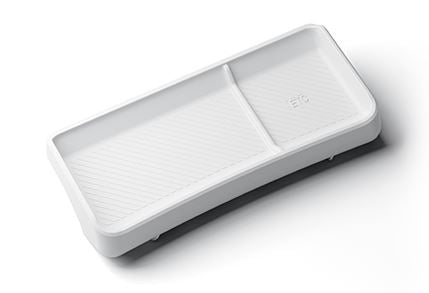
Tesla jack pads connect to the vehicle’s dedicated lifting holes through a locating post at the top, while the load-bearing surface at the bottom connects to the jack or vehicle lift. The locating post determines the position on the vehicle side, and the load-bearing surface creates contact on the equipment side. Together, they allow the lifting force to enter the vehicle’s load-bearing structure at the designated location.
To establish this connection, the technician must first identify the lifting point, then install the pad, and finally adjust the lifting equipment.
The complete sequence is as follows: Identify the dedicated lifting point → Insert the pad vertically → Check that it is fully seated → Center the lifting equipment beneath it → Apply a light preload slowly → Recheck the contact condition → Continue lifting
Preloading is a critical inspection step before the vehicle is raised further.
When the jack saddle first makes contact with the pad, the technician should confirm that the pad is not tilted and that the saddle has not shifted away from the center of the load-bearing surface. The equipment should only continue upward after stable contact has been confirmed.
Throughout the process, three points must remain aligned: the vehicle’s lifting point, the center of the jack pad, and the center of the lifting equipment’s support surface.
Some Model 3 and Model Y vehicles use circular access holes, but the hole design may vary by model and year. The actual locations should therefore always be confirmed using the owner’s manual for the specific vehicle.
What Are The Key Differences Between Dedicated Tesla Jack Pads And Ordinary Rubber Blocks?

Dedicated Tesla jack pads are model-specific adapters designed with structural dimensions that correspond to the vehicle’s interface. Ordinary rubber blocks are universal contact pads primarily intended to provide cushioning, separation, or additional friction.
Put simply, dedicated pads incorporate model-specific information, while ordinary rubber blocks do not.
|
Comparison Category |
Dedicated Tesla Jack Pads |
Ordinary Rubber Blocks |
|
Product Positioning |
Model-specific interface adapter |
Universal contact pad |
|
Design Basis |
Vehicle-side holes, contours, and dimensional relationships |
Common jack saddles and support surfaces |
|
Structural Features |
Usually include a locating structure designed for specific models |
Usually feature flat surfaces, grooves, or universal tread patterns |
|
Primary Function |
Maintain a clearly defined interface relationship |
Provide cushioning, separation, or additional friction |
|
Load-Bearing Requirement |
Must retain their basic geometry under load |
May conform to the surface through greater deformation |
|
Degree Of Compatibility |
Narrower range of applications with stronger model specificity |
Broader range of applications with weaker model specificity |
These are not simply premium and basic versions of the same type of product.
Ordinary rubber blocks prioritize broad compatibility and therefore reduce their dependence on the structure of a particular vehicle. Dedicated pads accept a narrower range of applications in exchange for a more clearly defined dimensional relationship with the vehicle.
At the same time, the material only determines how a product deforms, while its structure determines what type of product it is.
Even if an ordinary rubber block is made from harder or thicker material, it does not gain model-specific characteristics as a result. Conversely, a product that resembles a dedicated jack pad must still have a genuine corresponding relationship with the vehicle interface before it can be considered a compatible adapter.
Therefore, when distinguishing between the two, examine the design basis first and the material properties second. Ordinary rubber blocks are designed around contact surfaces, while dedicated Tesla jack pads are designed around the vehicle interface.
What Damage Can Improper Lifting Cause To A Tesla?

Improper lifting can damage a Tesla’s underbody panels, body structure, and battery pack housing. In severe cases, it can also cause the vehicle to slip. The underlying reason is that the equipment applies the vehicle’s weight to a location that is not designed to bear it.
Damage generally falls into four categories:
• Underbody panel damage: The jack saddle may first contact a protective panel or aerodynamic component, after which pressure may cause dents, cracks, detached clips, or lifted edges.
• Body structure deformation: When the load is concentrated over a small area, the rocker panel or underbody metal may develop indentations, creases, or localized collapse. This type of damage may not trigger a vehicle warning.
• Pressure damage to the battery pack housing: If the equipment is positioned near the housing, a seam, or a sealed edge, it may leave scratches, dents, or compression marks. The absence of a dashboard warning does not prove that the mechanical structure is undamaged.
• Secondary damage caused by slipping: An off-center support position may cause the vehicle to shift after it has been raised, potentially striking the body, wheels, or surrounding equipment and endangering people nearby.
Damage should therefore be assessed not only by the size of the mark, but also by identifying which component has been affected. If significant deformation, fluid traces, unusual noises, or vehicle warnings are found, stop the work and arrange a professional inspection.
What Practical Value Is There In Carrying Tesla Jack Pads In The Vehicle?

First, they reduce service interruptions caused by missing tools.
If a shop does not have the appropriate adapter when the vehicle reaches the service bay, staff may need to search for tools, adjust the appointment, or pause the work. Keeping jack pads in the vehicle provides an additional option that may be used on site.
Second, they improve tool availability across different service situations.
Tesla service centers, independent repair shops, mobile service providers, and roadside assistance vehicles do not all carry the same equipment. Jack pads stored in the vehicle travel with it to the service location.
Third, they make communication during vehicle handover more specific.
The owner can mention in advance that dedicated jack pads are available in the vehicle, allowing the technician to decide whether to use them based on the available equipment. This ensures that tool compatibility is confirmed before the work formally begins.
In this sense, jack pads may not be used very often, but their most practical value is that they are immediately available when the vehicle truly needs to be lifted.
How To Choose A Reliable And Model-Compatible Set Of Tesla Jack Pads?

When choosing a set, do not rely solely on its appearance or advertised specifications. Owners should confirm whether the supplier can clearly identify which vehicle the product fits, which production batch it came from, and who will handle any problems.
First, verify the complete compatibility list. The supplier should clearly specify the applicable models, years, and variants. If a product page merely states that the pads are “universal for Tesla,” owners should not assume compatibility themselves.
Next, check whether the product is traceable. The product model, manufacturer, and batch should be clearly marked, and the supplier should explain the basic conditions used for load testing. A tonnage rating without a stated testing method does not provide sufficient value for comparison.
Then, choose a complete set from the same production batch. Owners should check that every pad has the same height, specifications, and markings to avoid receiving a mixture of different versions.
Finally, after-sales support is also part of product reliability.
Confirming the return, exchange, warranty, and defect-handling procedures helps prevent compatibility problems from going unresolved after the product arrives. A Tesla jack pad set worth buying should have a clearly stated compatibility range, a traceable source, and consistent specifications throughout the set.
FAQ
Do All Tesla Models Need Jack Pads?
Not necessarily. Lifting interfaces may vary by model, year, and type of service. Always consult the manual for the specific vehicle rather than assuming that one product fits every Tesla.
Will Tire Shops Provide Tesla Jack Pads?
Many tire shops keep Tesla lifting pads on hand, but not all of them do. Asking before your appointment or carrying your own set can reduce delays on site.
Must Jack Pads Be Used For Tesla Tire Rotations?
Not necessarily. A Tesla must be lifted correctly during a tire rotation, but whether jack pads are used depends on the shop’s equipment. Jack pads cannot replace correct equipment setup and support procedures.
Can Incorrect Lifting Damage A Tesla?
Yes. If lifting equipment bears weight at a non-designated location, it may damage the underbody panels, body structure, or areas around the battery pack. The consequences depend on the position, equipment, and load.
Should Jack Pads Be Kept In The Vehicle?
Yes, this is recommended. Keeping them in the vehicle makes them available to tire shops, mobile technicians, or roadside assistance providers. Store them in a case and inspect them periodically for cracks, deformation, and continued compatibility.
Conclusion
Tesla jack pads may not be used often, but they can solve an important lifting-preparation problem during tire replacement, puncture repair, brake service, or suspension work. They do not require the owner to become a technician. Instead, they help compatible tools, professional equipment, and correct procedures work together more effectively.
A tool worth keeping does not have to be used frequently. Its value may lie in reducing uncertainty when it is needed. Do you already have a model-compatible set in your trunk?
Selected Tesla jack pad sets are currently available with a limited-time 5% early-bird discount. To confirm model compatibility, learn more about the products, or receive ordering assistance, send your vehicle model and year to info@tespex.com.au.